Saturday, October 5, 2019

I'm Fine


There's this thing in the chronic illness community about spoons.  The idea is that, when you are just a little bit sick all the time, you only have so much energy, so much of you that you can give day to day before you tap out.  The thing is, your spoon count changes from day to day, depending on all kinds of factors that are out of a person's control.  I understand the spoon thing, but I don't really feel like it accurately describes the experience.  Sometimes you get a sudden spoon replenishment halfway through the day.  Sometimes your spoon count suddenly crashes when you least expect it.  The reason the spoons thing doesn't really ring true for me, personally, is that I can't quite quantify my wellness so neatly.

"You're so healthy"  "You're so strong"  "You're an inspiration"

These are sentences that have been uttered to me in the past week.

I have felt like a bit of a dumpster fire lately.

It started with the depression.  "I'm just tired" is what I say when asked if I'm all right, when colleagues see me putting my head down on a desk.  Often, for me, depression is a signal that something is physically amiss.  Usually a rest day and iron supplements can help me pull out in relatively quick time.  I can usually "hide" it until it passes.  I get extra sleep and drink more water and eat more fruits and vegetables.

But this week it didn't pass so easy.  It got a little worse.  And then came the stomach ache, and with it the headache, the pounding heart, mild congestion, slight asthma, and night sweats.  Nothing debilitating.  Just enough to make me slump in corners during moments of quiet.  "Everything okay?"  they ask.  "I'm just tired." 

I'm just tired and achy and confused and I want to cry most every minute.

I'm fine.

It could be worse (which is, as a friend pointed out, is a pretty terrible barometer for wellness). 

I can still work.  I can still exercise.  I can still eat (but I'm not excited about it, and everything is turning to mush in my gut). 

So I start to take stock: what are the emotional stressors (oh, gross, I have to face my FEELINGS?  UGH) that are upsetting me?  What have I been eating lately?  What's disrupting my sleep?  Have I been journaling/meditating?  How much screentime am I getting?

I see a few things that *might* be problematic.  I take action.  I talk about my feelings with my spouse, with my friends.  I have a crying jag in the hallway with my boss while trying to hide my face from the passing students.  I take little moments to read, to meditate, to listen to calming music.  I eliminate foods that might be irritating my gut.  

I step on the scale; I've lost 5 pounds this week.

I'm fine.

There were times in my life when I would have given my last dollar to lose 5 pounds in a week.  Now I get excited when I have to 'go on a diet'.  "Baby, I'm getting too fat!" I say to my hubs with a giddy grin when my pants are snug. 

I make sure I'm never in a place too far from a bathroom until I get this all sorted out. 

I wonder how long I should self-assess and self-treat before seeking medical attention.  It's not so bad.  It's just a little low-level "everything is awful".  I can work.  If I can work I'm not *really* sick.  Because, if I'm being honest with myself, I'm just a little bit sick all the time.

I'm fine.

I've been far worse and been far better.  I know it can swing in either direction.  I know I have a lot of control over that swing.  I also know that I don't have *all* the control.  And I'm always still trying to figure it out.  Do I need more probiotics or less?  More protein or more starch?  Will asana make me feel better or worse?  I feel like a mad scientist experimenting on my own body and mind, seeing which little adjustments have what effect. 

Sometimes it's all working.  Sometimes my system, my routine, my self-care is humming along in lockstep and I feel like a wellness warrior, smashing all the assumptions about chronically ill people.

And sometimes I smile weakly at the people who ask how I'm doing and lie right to their faces.


Monday, May 13, 2019

Home Brew Kombucha

Anyone who follows my Instagram feed knows that I've developed a bit of an obsession for fermented foods.  This might be partly due my German heritage (we do love our sauerkraut), but I'm going to credit my introduction to Kombucha as my reason for getting started with homemade ferments.

A few years back, when I was living in Brooklyn (along with all the other 20-something hipsters east of Saint Louis), a friend of mine gave me a sip of some wacky "health" beverage she was drinking.  It was fizzy.  It was tart.  It was faintly sweet.  It was ostensibly good for me.  It was everything I ever look for in a refreshing cool beverage.  I loved it, and I went right to the store the following day to purchase some Kombucha to take home.  You can imagine my shock and horror when I discovered that it sold for A MILLION DOLLARS per bottle (okay, between $3 and $5, but still, I mean, come ON).

It took me a few years of starting and stopping own homebrewed Kombucha before I really committed to the cause about a year ago.  My frequent bouts with IBS issues and my doctor's pleading to get more probiotics in my diet finally pushed me to make the effort and get this homebrew operation going (if I'm going to consume probiotics, I may as well make it complicated and fun), and I haven't looked back since.

I'm not going to lie--it's a bit of an operation, but once you've done a few batches, you get it down to a schedule and a system that is worth the savings and the quality you can only get from homemade goods.

If you're looking for a really good step-by-step tutorial (this blog is more of an overview and introduction), this is a great site:  https://www.liveeatlearn.com/the-simple-guide-to-kickass-kombucha/

And if you're looking for a really in-depth resource with more information than you could ever use, this is a great book:

In terms of ingredients, you need very little (all the more reason why the sticker price versus homebrew is pretty significant) -- black tea, sugar, water, and a SCOBY (symbiotic culture of bacteria and yeast).  That last thing is kind of like a jellyfish pancake made of bacteria.  It's every bit as gross as it sounds, and it's AMAZING.  You can make your own, you can get one from a friend (serious Kombucha brewers wind up with way too much every couple of months--I toss my spares in the compost), or you can be a capitalist and get your first SCOBY from a trusted internet retailer (spoiler alert, I was a capitalist).

"Mother" SCOBY from a trusted internet retailer

current SCOBY collection
So here's how you make it: the first thing you do is brew some tea.  There are a few kinds you can use, but some are totally off-limits--it's something to do with the acidity and presence of caffeine (most of which gets destroyed in the fermentation process, but apparently these bacteria are sugar and caffeine fiends).  Your best bet is some good-quality black tea, like ceylon, pekoe, or oolong.  Green tea can be used as part of the equation, but you need to have some quantity of black tea.  


Once your tea is hot and brewed, you mix in the sugar.  One cup sugar to one gallon tea.  Like the caffeine, most of this will disappear (SCOBY loves to eat sugar) during fermentation.  8 ounces of Kombucha contains between 2-6 grams of sugar.  That is to say that one 16 ounce bottle has less sugar than an apple, and it's just as good at keeping the doctor away.  You can use maple syrup or honey (I've tried both, and I simply prefer the flavor I get with cane sugar, plus it's cheaper), though the measurement changes slightly, so do your research.


Once your sugar is dissolved and the tea is cool (I brew a quart of concentrated sweet tea, and use cold, filtered water to cool and dilute it before putting in the SCOBY), you'll want to put the sweet tea plus SCOBY (and any starter 'juice' you have from your 'SCOBY hotel' you can spare) into a GLASS 1-gallon jar, and cover it with cotton muslin (use string or rubber band to secure).  I do not recommend cheesecloth, as (even if you fold it several times) fruit flies can still get in.  Unless you want extra protein, muslin is better.

And now you wait.  How long?  Eh, it depends.  I like to let it go two weeks.  I like my brew very tart and mature (I also throw in 2-3 SCOBYs for each brew, just to get it really sour).  The less time you give it, the sweeter (and more like tea) it will taste.  Leave it longer, and you'll get a tart, almost apple-cider flavor.  The fermenting process creates carbonation, so it should get fizzier the longer you leave it.  While you're waiting, you'll notice a few things happen: the color grows lighter, and the SCOBY grows thicker (or makes a whole new baby SCOBY).  It's very scientific and fun to watch.  You're sort of keeping pets, if you really think about it (is fermented food even Vegan, actually??).

Note SCOBY floating freely in its tea bath...
But I digress.  Once you've had your fun watching bacteria grow, you're going to take the SCOBY out of your gallon jug and move the brew into glass bottles (most people like the reusable locking Grolsh-style beer bottles) for a second fermentation.  It's drinkable at this stage, but I find it a little too sweet.  I leave it in the bottle for 3 days before moving it to the fridge.  Make sure some of the brew goes back into the SCOBY hotel (sometimes you have to brew up extra sweet tea to keep it juicy).

It's a good idea to 'burp' these daily during the second fermentation to avoid over-carbonation and bottle explosions.

This is the point at which you can add flavor if you like.  (Never flavor during the first fermentation--it will wreck your SCOBY.)  You can toss fruits or spices directly into the bottle, or you can boil up a tincture (this is turning into my favorite method--cleaning ginger and blueberries out of narrow-neck bottles is a pain in the tush).  A little goes a long way in terms of flavors--you want to preserve the flavor of the 'booch (as we insufferable obsessives are known to call it).  I'm a fan of blueberry/ginger, but I've also had success with pomegranate, cherry, hibiscus, and a fall blend made with orange peel, cloves, and apple cider.  The sky is the limit with flavors; let your creativity fly!

P.S.--there is a method of brewing Kombucha that involves using a several-gallon jar with a spigot, whereby you never fully empty the container.  This is called 'continuous brew'.  I haven't tried it yet, but I hear good things and I'm intrigued.  I just haven't justified the cost of a large container to date, but it seems inevitable in the not-too-distant future.  I'm having trouble keeping up with my own consumption at this rate.


Happy brewing!  Cheers to your health!


Friday, March 15, 2019

Un-Hive the Mind


I've been an avid journaler for most of my life.  I grew up in the Judy Blume era, devouring first-person accounts of teenage femininity.  I yearned to set my thoughts to the page and pour out my heart like Margaret in her prayers.

32 years of journals
Sometimes, I fancied myself a poet (and apparently had a rather dark imagination as a nine-year-old).

Classic composition notebook--an excellent way to begin the journaling lifestyle.

Eat your heart out, Sylvia Plath
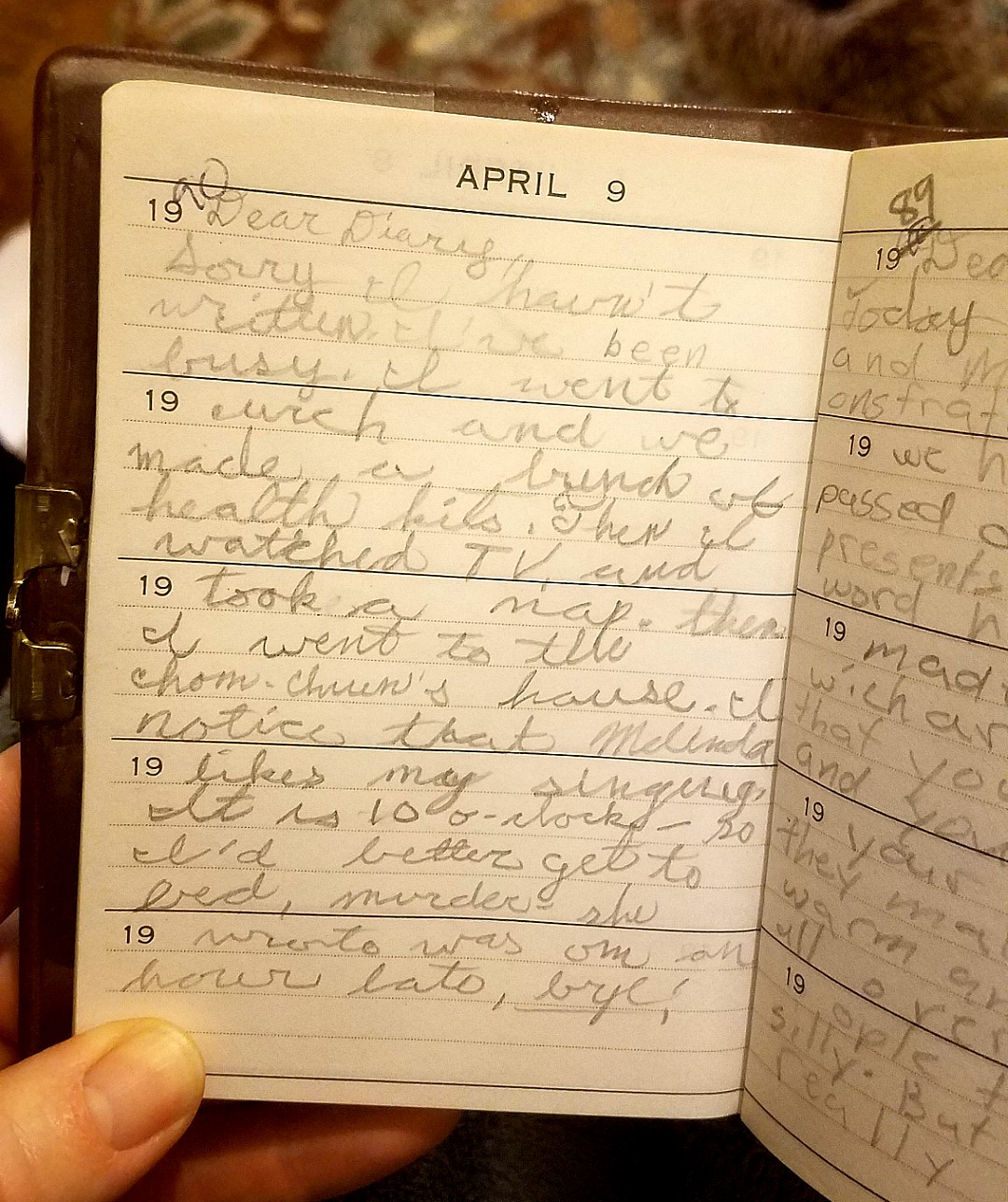
I even had one of those diaries with the little lock on it so that I could keep prying eyes away from my most secret admissions (though I dispensed with the tiny prescribed date format pretty shortly--I needed at least a page to pen my adolescent thoughts each day.)

1990--the most awkward of years: middle school

note how I apologize TO the diary for not writing in it...

As a young teen, our town library published a turn-of-the century journal that had been kept by a local girl throughout her youth.  The book was titled "An Account of My Life" and it chronicled the daily adventures of a girl whose struggles and achievements felt surprisingly relatable, considering our lives were 100 years apart.  What struck me as most interesting was how much her writing developed and matured over the years as she became a young woman.  I'm sure her English teachers played a role in this, but the act of writing regularly, even casually, even to oneself, is a surefire way to become a better writer.  So, in the interest of being a better writer, I wrote.  A lot.

1994:  My sophomore year of high school 

I love how I A: introduce myself and B: pretend I don't know what to do with a journal, as if I hadn't filled up two of them by this point.  This is the first of many times that I will refer to my diary as my "empty book".


This one, from 1995, was my journal while attending a 5-week performing arts camp in Connecticut called "Center for Creative Youth" (CCY)


Oh, child.  You've only begun to scratch the surface.
It was at about this time that I began to wonder if, one day, my empty books might be read by another person (and yes, I realize that if you're reading this blog post, I'm basically making that little fantasy come true...but believe me when I say these pages are VERY cherry-picked.  Most of my entries are either horribly boring or embarrassingly overshare-y).  My daily writing surged in the anticipation that long after my demise, some young impressionable reader might learn about our history through my records.

This is a journal I made by hand, and is the one I took with me to France in college when I spent a semester abroad.
I guess I fancied myself a travel writer.
I journaled prolifically the most through my late teens and twenties, in the period when the internet had just been born, those innocent years right before social media had taken hold.  I wrote about my travels, tragedies, and dreams, both literal and figurative.

2002: This was the journal I had when I was married, the year my father broke his neck, paralyzing him permanently.

My father is currently living his golden years as the salty but lovable curmudgeon he's always been.  He is still extremely paralyzed, but his opinions are as strong as ever. 
2005: This bejeweled beauty was a handcrafted gift. I loved the spiral binding, as it allowed me to write most naturally.

It's amazing how little has changed.  I still struggle to find solitude and wonder when I'll feel in control of my life.

2006: Living in NYC, running a children's theatre company and learning the true meaning of entrepreneurship.

I became so accustomed to anxiety, I didn't know how to function when it had gone missing.  I'm still working on this.

2008:  the year my health first started forcing me to re-assess my priorities.  Post herniated disc, pre-surgery.

Still worried about my weight, even though I could barely walk or sleep through the night.


It was about this time that MySpace was falling by the wayside (leaving poor Friendster in its dust) and Facebook opened its doors to non-Harvard plebeians like myself.  Twitter had been around for 2 years and was gaining steam.  I kept journaling, but slightly less.  Why should I cramp my hand up toiling away day after day in my paper journals, when I could just tap out 140 characters and reach an audience right away?  I didn't have to wait for postmortem fame--people would read what I wrote right away!
2016 -- my journaling had become much less frequent 

Again, my health was occupying much of my brainspace.

Each time I picked up my book to write, I would admonish myself for my delinquency in journaling.  I got caught up in the daily grind.  In the brief moments when I did decide to write, each entry started the same way:  "It's been so long since I've written in this book."  I wondered why I was bothering; I had experienced a bit of somewhat semiprofessional writing success, as a self-produced playwright and occasional web reviewer of local theatre.  I was blogging and posting on social media.  I had found a bit of an audience, and I didn't feel the pull to journal as much.  After all, what's the point in writing to no one? And so, my journaling continued to wane until...

This past year, as I began to process some Big Life Decisions (because why keep things simple?), and as I spent more and more time in mindful practices, I decided to take some time to actually read my old journals.  I pulled them all out from the bookshelves and started poring over them, one by one, remarking how much I had grown and how little I had changed.  I've gone through countless professions and years of schooling.  I've changed hairstyles, hobbies, and dreams again and again.  And yet, I kept seeing the same themes: I still worry about my weight.   I still seek outside approval and deal with feelings of imposter syndrome.  I still love doing yoga (and have to remind myself to do it).  I still get anxious (particularly when I'm feeling calm--something MUST be wrong if I'm calm!) and the theme of health and family are always present.  I needed to read these things about myself, by myself, to really appreciate how far I've come and how much I still need to work on my own growth.

This is when I realized that my audience is me.  It's always been me.  It was me from the beginning and it will be me until I can no longer read or write.  I'm the best at knowing what I want and knowing how I should go about getting it, in spite of what advertisers would have me believe. These days, we outsource everything--we hire professionals to pluck our eyebrows, paint our nails, rub our backs, and cook our food.  We look to the internet to answer any and every question we have; we seek advice from hundreds of 'friends' and 'followers' on our social media platforms.  Targeted commercials tell us what we should purchase and consume.  We turn to the "Hivemind" any time we want a good place for lunch, a dentist, or the solution to our latest existential crisis.  We're losing touch with ourselves, and we're losing our ability to make our own decisions and take care of our own needs.

By reading my old journals, I realized that the answers to my most pressing questions, the ones that really matter, from "how will I survive the next four weeks?" to "what am I going to do for my next career?" are all in my own little singular mind.  The hive is noisy; the buzzing distracts you from your thoughts.  Writing silences the buzz and focuses you on your true self. THAT is how the journal works.  It gives you a space to ask and answer your own questions.

This past January, I made two new year's resolutions:  1--do at least 15 minutes of yoga every day, no excuses.  2--journal every day, no excuses.

I'm only halfway through March, and I'm already pleased that I made these two resolutions.  I still love the internet (oh hi I write a blog) and I'm not quitting social media anytime soon (my cats are the cutest #catsofinstagram), but I've gained a newfound appreciation for personal reflection.  My letters to myself, upon re-reading, have given me pause to laugh, cringe, and ponder.

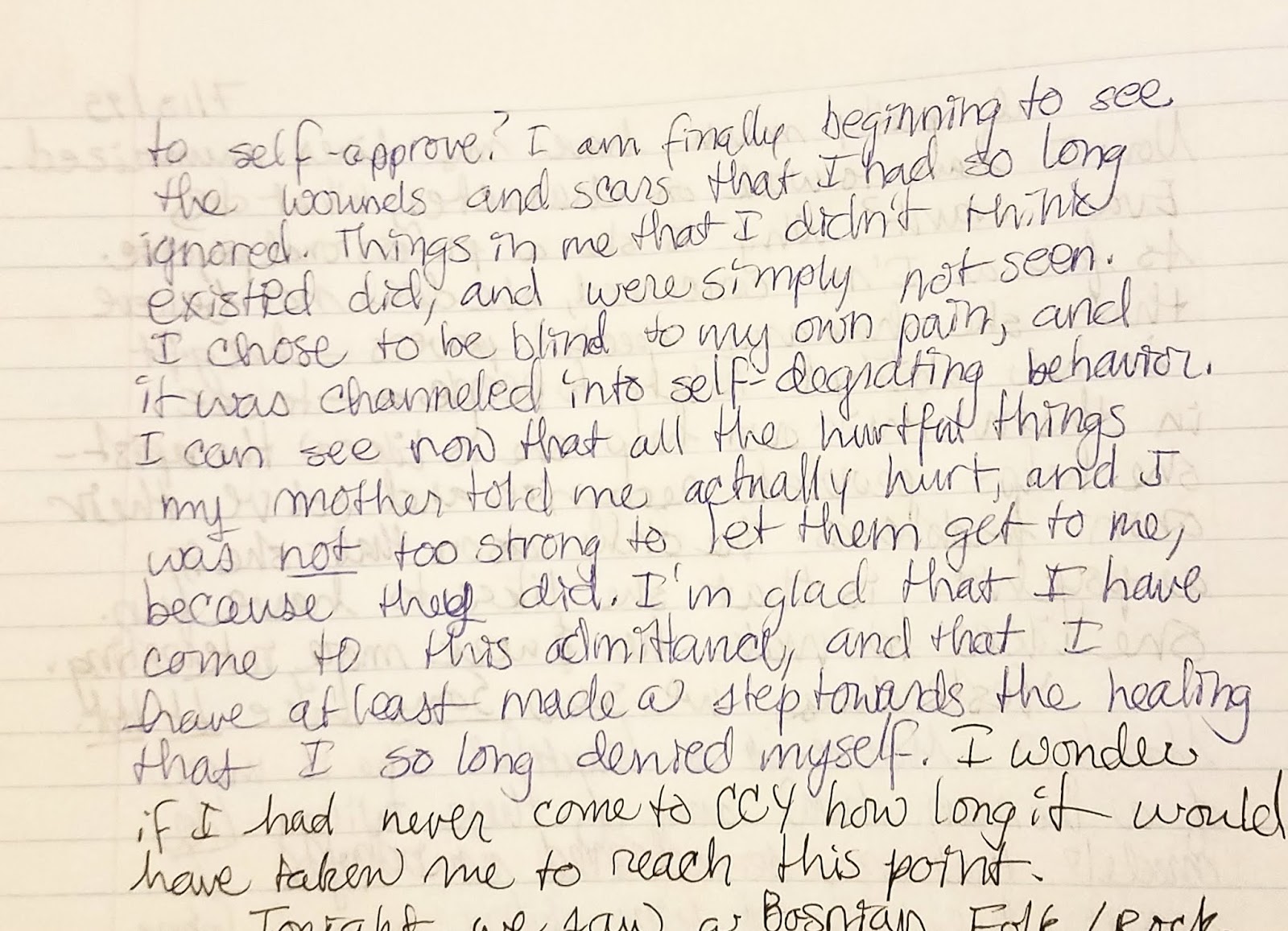
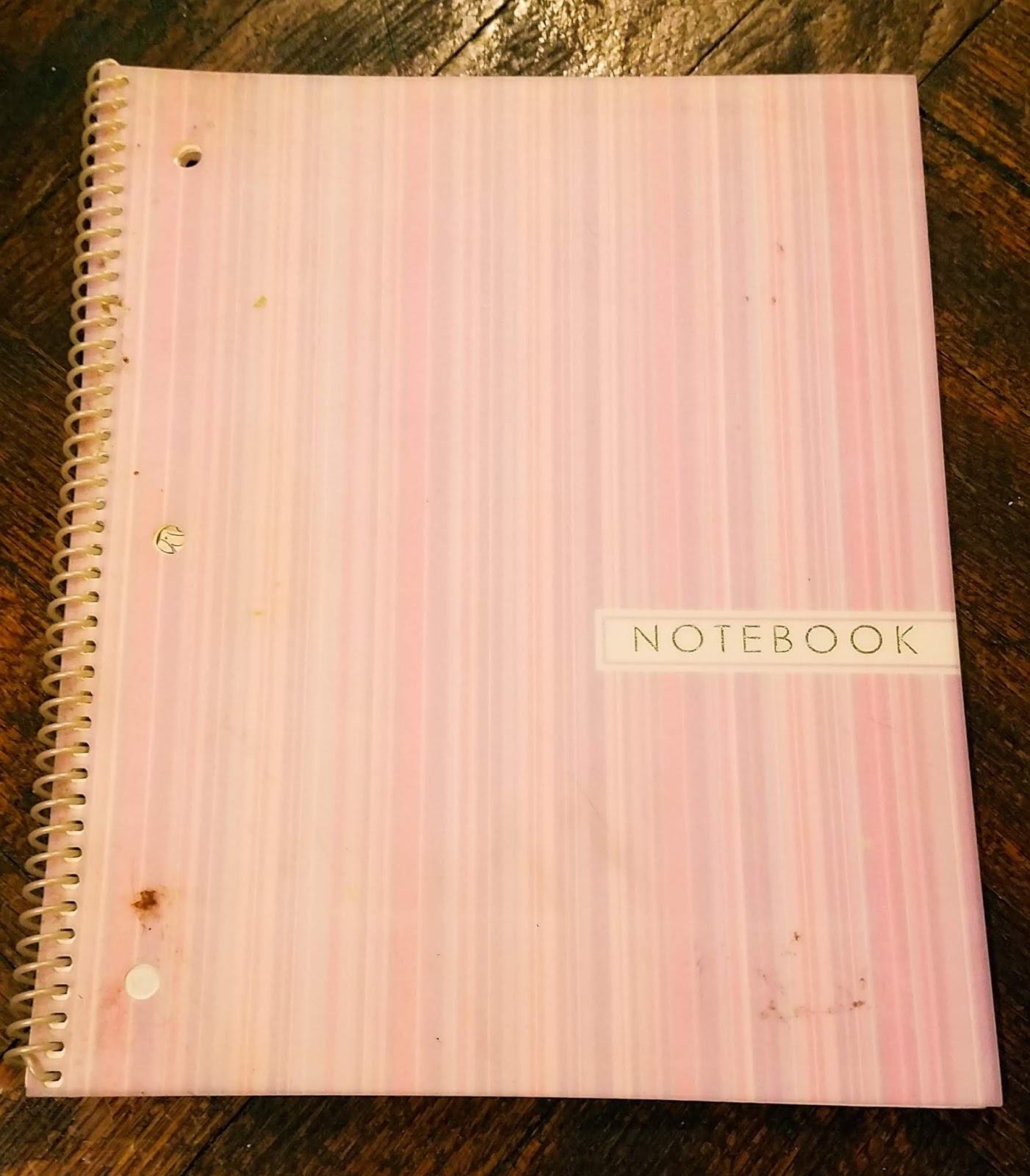
And some pages, like this 2007 entry in a simple spiral-bound notebook (literally labeled 'notebook') I wrote as part of the program "The Artists' Way" (which I'm considering reprising, now that I'm older and less wise), make me genuinely grateful to myself that I ever wrote journals and kept them for later re-reading.  It's amazing how much more clever I was twelve years ago than I am now.


Un-hive your mind.  Look inside.  Write down your thoughts.  Read them.  Write some more.  Read them some more.

To quote Oscar Wilde:  "I never travel without my diary.  One should always have something sensational to read in the train."

Wednesday, February 20, 2019

Zucchini-Cashew cheese

If you've read my previous posts about allergies, you know that dairy has been on the no-fly list for me for a long time, though I have fond memories of cheese and will stare longingly as you eat your pizza in front of me because I do, in fact, know what I'm missing (it's so, so good...)

I generally eschew grocery-store cheese alternatives, as they often contain some dodgy ingredients.  After testing out a few homemade recipes, however, I think I've unlocked a pretty decent sliceable cheese alternative (this would be unwise as a melting cheese, since it would probably turn runny right away, due to its reliance on gelatin).

My concoction is a slightly altered conjoining of two recipes I found online, which stand quite well on their own.  The first is cashew-based, and is soft and spreadable, like a grainy, nutty cream cheese.


While both of these options were good enough by themselves (I ate them all up, after all, didn't I?) I felt like each recipe was missing what the other lacked:  the zucchini cheese tasted kind of like savory jell-o, and the cashew cream cheese was a little aggressively nutty and gritty.

Like the culinary mad scientist I love to be, I decided to combine these recipes--I was not disappointed!

Here's how I made it (warning--there's prep to be done the night before--do not skip this step):

You will need:  

1 cup cashews
1 lemon (the juice of)
Salt
Pepper
2 TBSP nutritional yeast
3 packets gelatin (about 2 TBSP) OR you can substitute agar powder to make this vegan
2 small yellow zucchini/summer squash, peeled and sliced (green is fine, if you like green cheese)
1/2 tsp crushed or minced garlic
1/4 cup water
1 TBSP melted saturated fat (I used bacon fat; coconut oil would work fine)


FIRST:  soak 1 cup of cashews in water overnight.

Strain your soaked cashews and blend them up in a food processor with the juice of your lemon, water, garlic, nutritional yeast, salt, and pepper. 

While you're puréeing your cashew mix, you can put your zucchini slices on the stove in a pan of water to boil for about 5 minutes.  Strain the water out.

Once your cashews are puréed and your zucchini is boiled, put all the rest of the ingredients (salt and pepper to taste) into the food processor or blender together.  You should have a kind of pudding consistency.

At this point, you can pour your mixture into any heat-resistant container you like (you might like to line a pan with parchment paper for easy removal)--I decided to use a silicone mini-muffin tray so I could have little muffins of cheese.  Place it in the fridge for a few hours and voilà!


For someone who hasn't tasted real cheese in years, this was good enough to fool me.  I sliced up my muffins and snacked on them with the miracle of crackers I recently discovered (totally grain-free! They cost a fortune, but CRACKERS!) and now buy in bulk on Amazon.


Bon apétit!


image credits:

https://www.thefullhelping.com/go-to-cashew-cheese-recipe/
https://gutsybynature.com/2014/07/19/zucchini-cheese-dairy-free-nut-free/

Friday, January 25, 2019

It's Chronic Because It's Constant


I adore the sitcom "Brooklyn Nine-Nine," particularly for Terry Crews, America's most muscular softie.  The writers aren't shy about incorporating his herculean physique into the script, and in one episode, the young detective Jake Peralta makes a comment about his musculature, saying "How do you do it?"  Terry's response is brutally simplistic:  "Exercise and diet.  It's not that hard."


Jake's reply is the ugly truth no one likes to admit:

"Eh, seems pretty hard to me.  I don't think I'm going to do that."

We are rapidly approaching the end of the first month of 2019, and this is the season when resolutions start to slide.  Once people learn how much effort is actually required to achieve the goals they set for themselves, motivation tends to wane.

I'm here to tell you: it's all worth it.   All the things you do to achieve chronic wellness are worth it.

Let's start by unpacking what I mean when I say "chronic wellness."  When I was first diagnosed with Hashimoto's disease, I found myself emblazoned with the label of being "chronically ill". 

Dictionary.com defines "chronic" thusly:

1.  constant; habitual; inveterate:
a chronic liar.

2.  continuing a long time or recurring frequently:
a chronic state of civil war.

3.  having long had a disease, habit, weakness, or the like:
a chronic invalid.

4.  (of a disease) having long duration (opposed to acute).

Those last two definitions are awfully on the nose and a little hurtful.

On the one hand, having a diagnosis gave me an answer and a direction to turn for treatment.  On the other, I did not fancy the idea of being sick all the time.  I felt like I had had enough of that experience over the past year, trading a stomach virus for mono for an ear infection for bronchitis and then back to a stomach virus to relive this Moebius loop of never-ending illness.

I was going to try every single thing I could learn to do to bring my mind and body to peak health.  This is when I started my personal crusade for chronic wellness.

If you've read some of my older posts, you know how I used an elimination diet to determine my food sensitivities, and have given up all caffeine.  I drink alcohol very rarely and in small amounts.  I eat virtually no grains and have tested positive for allergies to a bizarre list of the most commonly consumed 'basic' foods.

In addition to my diet changes, I keep a strict schedule of sleep, exercise, meditation, and down time.  Virtually eliminating an evening social life has been my greatest gift to myself. 

To give you an idea of what I do to remain chronically well, here's a sample itinerary of my daily routine:

4:10 AM -- My alarm goes off.  It is entirely unnecessary for me to rise THIS early, but I actually relish early mornings and I like to take my time getting ready for the day.

I feed the cats and grab either a protein shake or bone broth.  I drink that down, plus a glass of water with vitamins, and head to the bathtub for my morning read.

4:15 AM -- I take a bath.  Really.  It's a small tub, but the hot water helps my muscles relax from yesterday's lunges and pushups.  I soak for a pretty long time while I read the book that I keep stashed by the tub for this very purpose.

5:00 AM -- I finish my bath with a cold shower for 12 breaths, and continue preparing for the day as I drink another glass of water, this time with branch chain amino acids.  I put on my gym clothes and check my work email (I go to bed early, so the messages pile up while I'm asleep).  I place my breakfast (I made it last night) in my backpack and put up my hair.

5:25 AM -- If I'm riding my bike today, I need to be getting out the door.  If I'm driving, I have a few minutes to tidy and/or journal before I leave.

5:45 AM -- I arrive at the gym for my pre-workout warmup.

6:00 AM -- Crossfit class begins.  *This* is when I do my socializing.  I spend most mornings with my friends, talking, laughing, and doing hundreds of burpees.  I have to keep my body in top shape to avoid debilitating back pain, and I believe the exercise helps mitigate the hypothyroid response to my autoimmune condition.  Fitness is medicine.  It's not everyone's idea of a happy hour, but for me, it's way more fun than sitting in a loud bar at night attacking my own liver and watching other people exercise professionally on TV.  

7:00 AM -- I perform my final morning ablutions at the gym if I'm driving (if I'm on my bike, I wait until I get to work to do this). 

7:30 AM -- I arrive at work and eat my pre-made breakfast: two hard boiled eggs and 1/2 an avocado.  I have fruit and/or plantain chips for a snack.  Sometimes I snack right away.  That's okay.  I keep beef jerky, sports gummies, and Lara bars as a backup.  (I can't eat most of the school's offered snacks, and sometimes my work days go late into the evening.)  On rehearsal days, I bring an extra protein shake and a green smoothie for 'dinner'.

8:30 AM -- The school day starts (I currently work full-time as a middle school teacher: French, Chorus, & Drama).   I put a hot water/lemon/ginger tincture in my travel mug to keep me warm and hydrated throughout the morning. 

11:50 AM -- I have lunch with the middle-schoolers.  I frequently compose a sort of dairy-free chef salad, as the main hot dish being served is often off-limits with my dietary restrictions.

3:15 PM -- My "official" workday is over.  If I have meetings or rehearsal, the day may go as long as 7PM (longer for parent-teacher conferences and evening events).   I do not go to Crossfit the following day when I work past 6PM.  I have learned to respect my limits in terms of energy expenditure and rest requirements.

4:30 PM -- On a short day, I'll be home at this hour.  I do yoga, I meditate, I cook dinner, I read, and/or I do homework.  If I didn't journal in the morning, I do it now.  Most importantly, I pack my outfit and food for the following day. 

6:00 PM -- I eat dinner and I wind down.  As you can tell by my opening statement, I enjoy a cute TV show.

7:10 PM -- I go to bed.  Really.  I give myself 9 full hours to rest, knowing that I might take a while to fall asleep or awaken in the middle of the night (I keep myself very hydrated). 

4:10 AM -- Start all over and do it again.

It's a strict regimen, but once you've been down a rabbit hole of sickness, you'll do literally everything in your power to be well, and this system is what seems to work for me.

That's where I'm really going with all this (Oh, really, Dianna? You have a POINT? That's a first).  You (and I mean YOU, the reader) have so much in your power regarding your own wellness.   It can feel daunting, accepting that your personal health is your greatest responsibility (even and especially if you care for dependents--you're no good to anyone when you're not well enough to be there for them). 

Please don't misunderstand me--I'm NOT suggesting that your medical doctor isn't a great ally--it was a medical doctor who first suggested I try the elimination diet.  It was a medical doctor who discovered my autoimmune condition.  Doctors are there for you when you are sick and injured, but they are disease-treaters, not wellness-enablers.  My ability to function optimally each day is heavily influenced by my own actions, regardless of pharmaceutical intervention or medical treatment.   To me, that is empowering.  I have power over my health.  Everyone can do something to make themselves more well.

I get it.  It's hard.  It's a lot of work.  Chronic wellness takes constant effort.  That is the very definition of chronic.

The worst part is, it never gets easier.

It would be easy for me to take just one cookie from the faculty lounge.  One slice of cheese can't do that much harm, can it? 

Then I remember the searing stomach pain, the debilitating coughing, the paralyzing fevers and fatigue. 

I don't take the cookie.  I leave the cheese.  My stomach feels wonderful, and my lungs are working.  My temperature is normal, and I don't feel like a Mack truck hit me. 

If you're thinking of backing out on your New Year's Resolutions now, ask yourself this:  why did you set goals for yourself in the first place?  What is your "why"?

I bet you.     I bet you.     I bet you.

I bet you it's worth the trouble.  

YOU'RE worth the trouble.

It doesn't get easier; YOU get stronger.

Don't give up on your goals now.  I believe in you.


image credits:  https://www.reddit.com/r/fatlogic/comments/567btp/brooklyn_ninenine_hit_the_fatlogic_nail_on_the/


Nothing Tasted As Awful As Skinny Felt

 Content Warning: disordered eating, anorexia, mental health crises If you have read any of my previous posts, you know that I have written ...